
Roofs, heat and how a space feels through the day

Updated: May 2

Lately, we have been thinking a lot about roofs. Not just as a covering, but how much they actually decide the way a space feels inside.
Different roofs seem to behave very differently, especially in hot climates like ours.
Material plays a role here. A typical RCC slab tends to absorb and hold heat, which slowly makes its way inside. Systems that use lime layers, like in a Madras terrace roof, seem to handle heat a little differently, probably because of how they are built in layers.
Thickness starts to matter as well. Thicker systems like a Madras terrace roof or even a jack arch roof seem to delay heat entering the space. Some thinner systems, especially certain sloped roofs, might heat up faster but also cool down faster. It is not about one being better, just how each behaves through the day.
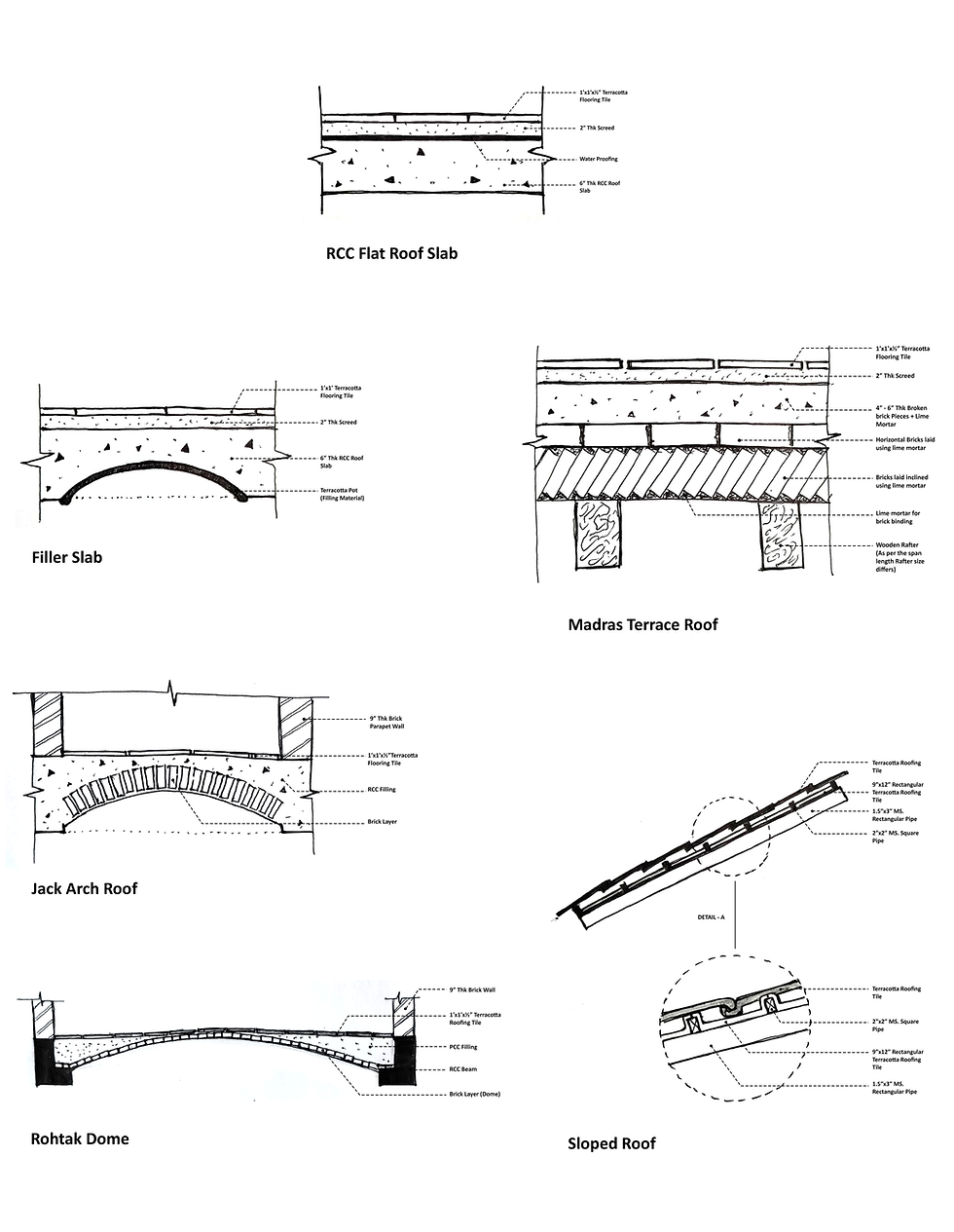
Then there are layers and air gaps. Roofs that are not just a single solid layer, but have some form of gap or layering, seem to slow down heat transfer. Mangalore tile roofs, for example, start working better when there is an air gap or an added layer below. Even small gaps can make a difference. Filler slabs might help a bit here, but we are still trying to understand how much.
Surface exposure is another part of it. Flat RCC slabs sit directly under the sun for most of the day. Sloped roofs don’t always take the same intensity. Forms like vaults or a rohtak dome also seem to behave differently, maybe because the sun does not hit them in one constant way.
We noticed something along these lines in one of our projects. A room with a rohtak dome roof, along with rat trap bond walls and lime plaster, felt noticeably cooler than some of the other spaces, even though its roof was fully exposed to the sun. It is hard to point to one reason, but the combination seemed to work better.
What becomes interesting is how all of this plays out over time.
Some spaces might feel okay through the morning and slowly heat up by afternoon. Some might heat up faster but cool down quickly once the sun drops. Others seem to hold on to heat even into the evening. This idea of delay, or time lag, starts becoming important when we think about how spaces are actually used.
It also makes us question how we place different rooms. What works for a space used in the afternoon might not work the same way for something used at night.
These are still things we are observing and trying to understand better through our work. Would be interesting to see how different roofs behave in real situations over time.
What have you noticed in the spaces you use?


Comments